The CFO’s Role in Modernizing Accounts Receivable

Accounts receivable is no longer just operational; it’s a strategic lever. CFOs who modernize AR with the right mix of expert oversight and automation can improve cash flow, strengthen working capital, and enhance financial resilience.

Modern finance leaders guide operational strategy, protect liquidity, and improve financial visibility across the organization. Accounts receivable sits at the heart of these responsibilities. When receivables perform efficiently, cash flow becomes predictable, and capital is available for growth. When AR struggles, even profitable companies can experience liquidity pressure.

Many organizations still treat receivables as an administrative task: invoices go out, collectors follow up, and cash eventually arrives. That model is increasingly inadequate. Payment cycles have grown complex, customer expectations have evolved, and finance teams must handle larger volumes with fewer resources. Without modernization, traditional collections processes quickly become strained. Executive attention from the CFO can make a measurable difference.

Why AR Optimization Matters

Improving receivables performance delivers strategic benefits:

  • Reduces Days Sales Outstanding (DSO) and strengthens working capital
  • Enhances dispute management and minimizes write-offs
  • Preserves customer relationships through consistent communication

Companies that consistently collect earlier can reinvest capital into growth initiatives rather than relying on external financing. Achieving these outcomes requires the right combination of technology and expertise; automation alone cannot resolve complex B2B collection challenges.

The Challenge of Internal Limitations

Internal AR teams often face competing priorities: issuing invoices, applying cash, resolving disputes, and following up on collections simultaneously. As transaction volumes grow, maintaining consistent outreach becomes difficult.

While automation tools help, experienced receivables professionals are essential to understand customer behavior, resolve disputes efficiently, and execute escalation strategies without damaging relationships.

How Specialized AR Partners Help

For 40 years, Leib Solutions, a premier B2B collection agency, has helped organizations strengthen receivables performance without disrupting customer relationships.

Our first-party collections programs operate as an extension of your finance team, providing expert professionals who focus exclusively on recovering past-due receivables. Communications occur under the client’s brand, ensuring a professional and consistent experience for customers. This approach often delivers better outcomes than internal teams alone or immediate third-party collection escalation.

Technology amplifies the impact. As part of the Smyyth organization, Leib leverages the Carixa360 Accounts Receivable Automation Suite, which supports the full order-to-cash lifecycle, including:

  • Credit management
  • Collections workflows
  • Deductions management
  • Reporting

Automation ensures invoices reach customers quickly, reminders occur consistently, and account data is transparent to both collectors and finance leaders. The combination of expertise and technology creates a powerful framework for improving AR performance.

The Hidden Cost: Time Value of AR

It isn’t just about the risk of a write-off. It’s about the Time Value of AR.

Every day an invoice sits unpaid beyond its terms, your company is effectively providing an interest-free loan to your customer while your own cost of capital remains fixed. If your Days Sales Outstanding (DSO) is drifting, you aren’t just losing interest; you are losing the ability to reinvest that cash into growth, inventory, or research and development.

Proactive intervention at 45–60 days isn’t just “collection”—it’s liquidity management.

Executive Diagnostic Questions

CFOs evaluating their AR strategy can uncover improvement opportunities by asking:

  • Are collection efforts consistent across all accounts, or are they reliant on individual team capacity?
  • Do customers have convenient access to invoices and multiple payment options?
  • Are disputes resolved promptly to prevent receivables from aging unnecessarily?

Gaps in these areas signal a need for modernization and targeted support.

Building a Stronger Order-to-Cash Strategy

AR transformation rarely happens overnight. The most successful organizations implement incremental improvements by refining workflows, analyzing payment trends, and introducing tools that reduce manual effort.

Over time, these changes create predictable, resilient cash flow cycles. The key insight is that accounts receivable is not a back-office function—it is a strategic financial discipline that enables growth, reduces risk, and improves operational efficiency.

Learn More

If your organization is ready to modernize accounts receivable and strengthen B2B collections, Leib Solutions, a premier B2B collection agency, can help.

Visit the Leib Solutions blog for additional insights, or email info@leibsolutions.com to explore how expert receivables management combined with AR automation can transform your order-to-cash process.
Recover Cash Without Burning Bridges: The Strategic Case for First-Party Collections

Aggressive collections alienate active buyers. Passive follow-ups starve working capital. Here is how a structured first-party collections program accelerates cash recovery while protecting the commercial relationships that drive long-term enterprise value

When receivables age, the wrong collections approach can permanently damage customer relationships that took years to build. A structured first-party collections program enables companies to accelerate cash recovery while preserving the commercial partnerships that drive long-term revenue.

For many organizations, collections becomes a zero-sum game: recover overdue cash to reduce Days Sales Outstanding (DSO), or tread lightly to keep past-due customers actively buying.

Push too hard, and sales suffer. Move too slowly, and working capital evaporates.

The solution is not choosing between firmness and diplomacy. It is deploying a collections process engineered for both—which is precisely where first-party receivables management delivers impact.

Why Traditional Collections Models Break Down

Internal accounts receivable teams are rarely staffed or structured to manage late-stage aging accounts consistently at scale.

When receivables push past 60 or 90 days, operational pressure compounds:

  • Collectors juggle hundreds of accounts with competing priorities.

  • Sales teams intervene to appease frustrated accounts, stalling recovery.

  • Unverified deductions and minor disputes blur the line between genuine errors and deliberate payment delays.

Faced with mounting backlogs, finance leaders often default to extremes: let aging accounts drift indefinitely, or outsource them to aggressive third-party agencies when write-off risk peaks.

First-party collections provides the strategic middle path.

What First-Party Collections Actually Means

First-party collections operates as a seamless extension of your enterprise, not an external enforcement agency.

Specialists represent your brand directly—adopting your tone, your workflows, and your commercial priorities. The objective is not confrontation; it is resolution.

At Leib Solutions, we have refined this model over more than 40 years of receivables management. Our first-party teams function as an integrated arm of your credit department, engaging accounts in a collaborative, solutions-driven manner.

This distinction is critical for historically reliable buyers who have developed poor payment habits. Customers invariably pay based on how they have been conditioned to pay. When internal teams permit habitual late payments, accounts require systematic recalibration rather than hostile escalation. Customers respond far more cooperatively when outreach feels like routine account management rather than punitive action.

The Financial Architecture of a First-Party Program

Organizations routinely underestimate the compounding drag of overdue receivables. Beyond standard cash-flow friction, aging portfolios introduce severe operational overhead:

  • Inflated internal administrative workloads

  • Compounding write-off and default exposure

  • Margin erosion through unearned discounts and unresolved deductions

Cash trapped in aging invoices is working capital denied to reinvestment. By accelerating the dispute-to-cash cycle, first-party programs serve as an active liquidity management tool.

For modern CFOs, managing liquidity requires looking beyond DSO—a high-level average that frequently obscures margin leakage, unearned discounts, and unresolved deductions. A targeted first-party workflow directly improves critical, diagnostic performance indicators:

  • Collection Effectiveness Index (CEI): Quantifying true recovery capacity relative to available debt.

  • Days Deductions Outstanding (DDO): Isolating and resolving friction points before they become permanent margin loss.

  • Net Revenue Optimization (NRO): Securing the actual gross margin tied up in administrative hold-ups.

Resolving friction points before they harden into permanent write-offs preserves earned revenue and demonstrates operational control—a core priority confirmed by 1,297 CFOs surveyed in a recent Working Capital Index.

Earlier customer engagement consistently reveals that payment delays stem from administrative friction rather than insolvency. Common bottlenecks include:

  • Missing or misdirected invoices

  • Unconfirmed Proof of Delivery (POD) documentation

  • Unreconciled short payments or deductions

  • Ingrained, unmonitored vendor-payment cycles

When surfaced within standard payment cycles, these friction points resolve quickly. When left unmanaged for months, the likelihood of full recovery declines precipitously.

Critical Questions for Finance Leadership

Finance executives evaluating internal collections capabilities should evaluate three baseline factors:

  1. Capacity: What percentage of internal credit capacity is spent manually chasing standard delinquent accounts rather than managing credit risk?

  2. Alignment: How frequently are account executives diverted from revenue generation to mediate basic invoice disputes?

  3. Proactivity: Does the organization manage past-due accounts systematically at first delinquency, or reactively after balances breach critical aging buckets?

Persistent friction in any of these areas indicates that internal workflows require specialized operational reinforcement.

Combining Human Expertise With Integrated Automation

Modern receivables management requires deep integration between experienced talent and purpose-built technology.

Leib Solutions operates within the broader Smyyth ecosystem, leveraging the Carixa A/R Platform to support the order-to-cash process. This platform-driven approach accelerates performance through:

  • Digital Invoice Presentment: Instant self-service access to all transaction documentation.

  • Algorithmic Dunning & Outreach: Multi-channel workflows executed with zero manual latency.

  • Real-Time Portfolio Intelligence: Instant visibility into recurring deduction patterns and buyer behavior.

Software alone cannot negotiate complex commercial balances. Paired with senior credit professionals, however, automation establishes an optimized, scalable collections operation that shortens payment cycles.

Integrating Third-Party Collection Action

Because Leib provides both first-party and licensed third-party collection agency services, accounts transition seamlessly within a single, unified system.

  • Zero Operational Friction: No secondary onboarding, additional service agreements, or external data transfers are required.

  • Controlled Escalation: When an account requires intensified collection activity, it transitions to our specialized agency group only upon your explicit approval.

  • Uninterrupted Workflow: Eliminating file transfers and vendor handoffs prevents recovery delays, maximizing net cash flow and account resolution rates.

Decades of Commercial Experience

Not all past-due balances carry the same operational profile.

A missed payment may stem from a simple AP routing error, or it may indicate a distressed customer prioritizing competing vendor obligations. Successfully navigating these scenarios requires specialized commercial fluency.

Leib Solutions brings decades of B2B receivables experience across complex, high-volume industries. That depth of expertise allows our teams to engage customers constructively while keeping recovery efforts focused.

When software tools and internal efforts hit a ceiling, having a dedicated partner already integrated into your systems makes all the difference.

Protect Cash Flow Without Sacrificing Client Retention

Recovering commercial debt should never jeopardize your enterprise revenue base.

With an engineered first-party program, organizations maintain high brand standards, identify and dismantle administrative payment hurdles early, and drive immediate liquidity back to the balance sheet.

Learn More

If your organization is evaluating ways to improve B2B collections performance while preserving customer relationships, Leib Solutions can help.

Visit the Leib Solutions Blog to explore additional insights, or contact the Leib team directly at info@leibsolutions.com to discuss how first-party receivables management can support your order-to-cash strategy.

Why Quarterly A/R Reviews Are Critical to B2B Cash Flow Protection

Mid-year is a natural checkpoint for every business. It is far enough into the year to see customer payment patterns, but early enough to correct problems before they become write-offs, disputes, or legal collection matters.

Too many companies review sales performance carefully but give less discipline to accounts receivable. That is a mistake. A/R is often one of the largest assets on the balance sheet. It is also one of the most exposed.

For B2B companies, a quarterly receivables review should be more than an aging report. It should identify risk, protect cash flow, and determine which accounts need immediate escalation.

Warning signs include:

  • Customers stretching payment terms
  • Repeated broken promises to pay
  • Increasing partial payments
  • Sudden disputes after months of silence
  • Unresolved credits or deductions
  • Accounts that require constant follow-up
  • Customers becoming difficult to reach
  • Balances moving from 60 to 90+ days without a clear plan

These issues rarely improve on their own.

In commercial collections, time matters. The longer an account ages, the harder it becomes to recover. Documentation becomes harder to locate. Contacts change. Disputes become less clear. Debtors lose liquidity. In some cases, the company may close, sell assets, or enter insolvency before action is taken.

A common mistake is assuming a long-term customer will eventually “catch up.” Sometimes they do. Often, they do not. When a customer is under financial pressure, they usually pay the creditors who are most organized, persistent, and prepared to act.

That does not mean every slow account should immediately be sent to collections. It does mean every account should have a clear status, owner, next step, and escalation point.

A disciplined quarterly A/R review should ask:

  • Is this account genuinely collectible?
  • Is there a real dispute, or only a delay tactic?
  • Do we have complete documentation?
  • Has the customer made and kept payment commitments?
  • Is internal follow-up producing results?
  • Is the account approaching the point where recovery probability declines?
  • Should the matter be escalated before leverage is lost?

Early referral to a professional commercial collection agency can significantly improve outcomes. A good agency brings structure, urgency, experienced negotiation, debtor evaluation, and escalation discipline that internal teams may not have the bandwidth to provide.

Importantly, professional collections do not have to destroy customer relationships. In many B2B situations, third-party involvement helps preserve the relationship by separating the payment issue from the sales relationship and creating a professional path to resolution.

The best results usually occur while the debtor is still operating, communicating, and capable of paying.

Quarterly A/R reviews are not simply accounting exercises. They are cash protection reviews. They help companies reduce bad debt, preserve working capital, and act before slow-paying accounts become uncollectible accounts.

For businesses that want stronger control over receivables, Leib Solutions provides commercial collection services designed to recover past-due B2B accounts professionally, persistently, and with the urgency required to protect cash flow.

How to Identify Financial Distress in Clients Early

How to Identify Financial Distress in Clients EarlyFinance professional analyzing aging reports and payment behavior trends to identify client financial distress.


Every business cherishes its reliable, long-standing clients. They pay on time, communicate clearly, and contribute consistently to your bottom line. But what happens when these “good clients” start to falter? When late payments become the norm, excuses pile up, or communication suddenly stops?

It’s a scenario many businesses dread, and one that often signals more than just a momentary oversight. It can be a tell-tale sign of deeper financial distress within your client’s own operations. Missing these subtle cues can lead to significant revenue loss, strained relationships, and a draining of your internal resources.

At Leib Solutions, we believe in a proactive, ethical approach to accounts receivable management. Understanding the financial health of your client portfolio is not just about protecting your own cash flow; it’s about anticipating challenges, fostering resilient partnerships, and making informed decisions. This post will equip you with insights to spot those early warning signs and guide you on how to respond strategically and ethically.

The Subtle Shifts: Early Warning Signs to Watch For

The first indicators of financial trouble are rarely a dramatic collapse. Instead, they often manifest as subtle deviations from established patterns. Training your team to recognize these changes is crucial.

1. Shifts in Payment Behavior

This is often the most direct, yet sometimes overlooked, signal.

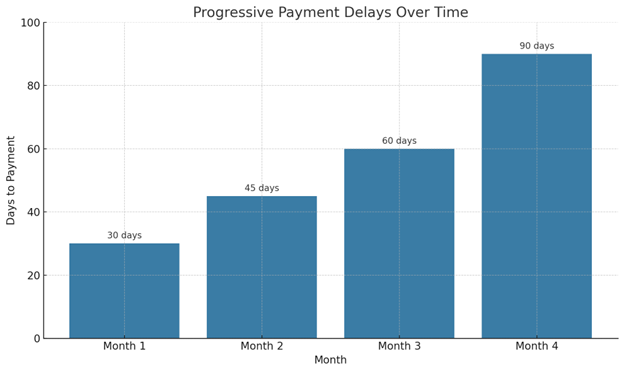
  • Increasing Payment Delays: A client who once paid consistently at 30 days suddenly pushes to 45, then 60, then 90. It’s not just a single late payment, but a growing trend of tardiness.
  • Partial Payments: Receiving only a portion of the outstanding invoice without prior agreement. This can be a tactic to string out payment or manage limited cash flow.
  • Frequent Payment Disputes: Suddenly, old invoices are being disputed for minor issues, or new, vague “concerns” arise that delay payment. This can be a deliberate stalling tactic.
  • Requests for Unconventional Payment Terms: A client accustomed to standard net-30 terms now requests installment plans, extended terms, or asks to pay in atypical ways (e.g., through third-party services they didn’t use before).
  • “Check’s in the Mail” Syndrome: Repeated promises that payment is “just about to arrive,” followed by no actual payment.

2. Communication and Operational Cues

Beyond the numbers, how your client interacts and operates can offer valuable insights.

  • Communication Avoidance: Your calls or emails to key contacts in their finance or procurement departments go unanswered, or responses become evasive and non-committal.
  • Reduced Order Volume/Frequency: A significant and unexplained drop in the quantity or regularity of orders from a previously reliable client. This could indicate a slowdown in their own business or a shift to cheaper suppliers.
  • High Personnel Turnover: Especially in their finance, procurement, or upper management. This can signal internal instability or a scramble to cut costs.
  • Increased Vendor Shopping: You notice your client suddenly soliciting bids from numerous new suppliers, even for services or products they previously sourced exclusively from you. They might be desperately searching for lower costs.
  • Complaints about Their Own Clients: Hearing from them about their struggles to collect from their customers. While this can elicit empathy, it also indicates their own A/R challenges.

3. Public and Market Indicators

These require a bit more proactive monitoring but can provide macro-level insights.

  • Negative Public Perception: Unfavorable news articles, negative social media chatter, or a sudden downturn in their public reputation.
  • Industry Downturn: Being aware of broader economic challenges or specific trends impacting your client’s industry. If their sector is struggling, they likely are too.
  • Layoffs or Restructuring Announcements: Public statements about workforce reductions, significant operational changes, or a merger/acquisition that seems like a distress signal.
  • Changes in Commercial Credit Ratings: While not always publicly accessible, a significant drop in their credit score from agencies can be a strong indicator of rising risk.

The Responsible Response: Navigating Difficult Conversations

Spotting the signs is just the first step. How you respond can significantly impact your recovery rates and, crucially, the long-term health of your business relationships. The key is to move from a reactive, accusatory stance to a proactive, empathetic, and strategic one.

  1. Internal Alignment: Ensure your sales, accounts receivable, and management teams are on the same page regarding the client’s status and the chosen response strategy. Inconsistent messaging can erode trust.
  2. Proactive and Empathetic Outreach:
    • Shift the Tone: Instead of immediately demanding payment, initiate a conversation with an empathetic tone: “We’ve noticed a recent change in payment patterns, and we wanted to check in to see if everything is alright on your end and if there’s anything we can do to help.”
    • Listen Actively: Be prepared to listen more than you talk. Your goal is to understand their challenges, not to preach.
    • Offer Solutions (If Appropriate): If their distress is temporary, can you offer a short-term, mutually agreed-upon payment plan? This gesture can build immense goodwill.
    • Maintain Professionalism: Regardless of their situation, always communicate with respect and professionalism.
  3. Document Everything: Meticulously record all communications, agreed-upon terms, and payment promises. This is vital for clarity and, if necessary, for any future recovery efforts.
  4. Know When to Draw the Line: While empathy is crucial, a business must protect itself. There comes a point where continued forbearance becomes detrimental. Establish clear internal thresholds for when to transition from a supportive partner to initiating a more formal collection strategy. This line is often blurred for internal teams, which is where external expertise becomes invaluable.

When Internal Efforts Fall Short: The Strategic Role of a Specialized Partner

Even with the best intentions and internal protocols, managing a financially distressed client can be incredibly challenging. This is where the specialized expertise of a commercial collections company like Leib Solutions becomes a strategic asset.

  • Objective Perspective: Your internal team has existing relationships and may be emotionally invested. A third party brings objective distance, allowing for clearer, more effective negotiation without damaging long-term ties.
  • Relationship Preservation through Professionalism: Our “No Noise” approach is specifically designed to recover funds while minimizing friction and maintaining the viability of your client relationships. We act as a professional buffer, allowing you to focus on your core business.
  • Specialized Expertise and Resources: We possess the legal knowledge, negotiation acumen, and advanced tools to navigate complex financial situations. This includes understanding the nuances of commercial law and effectively managing disputes.
  • Efficiency and Focus: Engaging an expert allows your internal A/R team to focus on current accounts and healthy relationships, significantly reducing administrative burden and freeing up valuable resources.
  • Improved Recovery Rates: Often, early engagement with a specialized agency, even at the first signs of trouble, can lead to significantly higher recovery rates than prolonged internal efforts. Our experience helps us assess the true likelihood of recovery and implement the most effective strategies.

Recognizing when a good client is heading down a difficult financial path is a critical skill for any business. Acting ethically and strategically, whether internally or through a specialized partner, protects your cash flow, preserves relationships, and ultimately strengthens your overall financial resilience.

Ready to Proactively Safeguard Your Accounts Receivable?

If you’re noticing these warning signs in your client portfolio and are seeking an ethical, effective partner to navigate complex financial challenges, Leib Solutions is here to help.

Contact us today for a confidential consultation.


Unlock Sustainable Growth: Why Your Accounts Receivable KPIs Are the Ultimate Strategic Compass

Financial dashboard displaying DSO, DDO, CEI, and accounts receivable turnover metrics.

Cash flow is the undisputed lifeblood of any business, directly influencing its operational capacity, investment potential, and overall resilience. Within this critical financial ecosystem, Accounts Receivable (AR) isn’t just an accounting entry; it’s a strategic asset reflecting your company’s future liquidity and its ability to convert sales into tangible cash.

Yet, businesses frequently grapple with the pervasive challenge of overdue payments. These delays tie up working capital, creating cash flow shortages that hinder daily operations, limit strategic investments, and ultimately stifle growth. This financial friction impacts everything from payroll to product development.

Mastering Accounts Receivable Key Performance Indicators (KPIs) and strategically managing collections are paramount for transforming your company’s financial health. By moving beyond basic definitions and embracing a strategic perspective, businesses can unlock significant value and build a more resilient financial future.

Deconstructing Key Accounts Receivable Performance Indicators

Understanding core AR KPIs is crucial for gaining actionable insights into your financial health.

  • Days Sales Outstanding (DSO): This fundamental metric quantifies the average number of days it takes to collect revenue after a sale. A consistently high DSO signals inefficient collections, potential liquidity issues, and impending cash flow problems. Conversely, a low DSO indicates a highly efficient cash conversion cycle. High DSO can lead to seeking external financing, incurring interest expenses, and limiting investment in growth opportunities. It can also signal underlying issues in credit policy, invoicing accuracy, or customer relationship management.
  • Days Delinquent Outstanding (DDO): DDO offers a more granular perspective by measuring the average number of days accounts receivable are past due. Unlike DSO, DDO focuses specifically on overdue accounts. A rising DDO indicates increasing collection challenges and a heightened risk of bad debt. It functions as an early warning system for broader economic downturns or internal weaknesses in credit vetting. Mishandling delinquent accounts can lead to client relationship damage and lost revenue.

Beyond DSO and DDO, other vital KPIs offer a comprehensive view of AR health:

  • Collection Effectiveness Index (CEI): CEI measures how effective a company is at collecting its receivables over a specific period. A CEI closer to 100% signifies superior collection performance.
  • Accounts Receivable Turnover Ratio: This ratio indicates how many times a company collects its average accounts receivable balance during a given period. A higher turnover ratio generally suggests efficient credit and collection practices.
  • Bad Debt Ratio: This expresses the percentage of uncollectible accounts relative to total receivables or credit sales. A lower ratio indicates effective credit management and successful collection efforts, minimizing direct hits to the bottom line.

These KPIs are deeply interconnected. For example, a high DSO and DDO will predictably correlate with a lower CEI and A/R Turnover, and consequently, a higher Bad Debt Ratio. Analyzing these metrics holistically allows financial decision-makers to identify specific weaknesses and formulate targeted improvement strategies.

The Unseen Costs of Suboptimal Accounts Receivable Management


Failing to manage AR effectively extends far beyond mere lost revenue, incurring a range of profound, often unseen, costs.

  • Impact on Liquidity, Working Capital, and Investment Capacity: Unpaid invoices tie up capital, restricting a company’s ability to meet immediate financial obligations. This lack of accessible cash can lead to cash flow shortages, hindering daily operations and limiting investment in strategic growth initiatives.
  • Operational Inefficiencies and Resource Drain: Suboptimal AR management creates significant operational inefficiencies. Companies expend considerable time and effort on internal collections, diverting staff from their primary, value-generating roles. This “invisible tax” on productivity means valuable expertise is directed towards non-core, high-stress activities, hindering strategic objectives and delaying new revenue generation.
  • Erosion of Profitability and Increased Risk of Write-offs: Late payments directly erode a company’s net profit. As debts age, their collectibility diminishes, increasing the likelihood of bad debt write-offs, which are direct hits to the bottom line.
  • Potential Strain on Client Relationships: Aggressive or unprofessional internal collection tactics carry a substantial risk of alienating valuable customers. Losing a client over a collection dispute can be far more costly than the debt itself, leading to customer churn, reputational damage, and a reduction in Customer Lifetime Value (CLTV).

Strategic Pathways to AR Optimization and Enhanced Collections


Optimizing Accounts Receivable requires a proactive and multi-faceted approach.

  • Proactive Invoicing, Credit Policies, and Communication: Effective AR management begins with clear, accurate, and timely invoicing. Establishing robust credit vetting processes for new clients can significantly minimize default risk. Consistent and professional communication with customers regarding payment terms and reminders can dramatically improve collection rates.
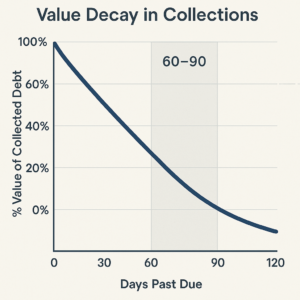
  • Identifying the Inflection Point for Escalating Collection Efforts: Despite best practices, some accounts will become overdue. The crucial moment when internal efforts become less effective or too costly typically occurs when accounts move beyond 60-90 days past due. At this stage, the likelihood of collecting the debt through internal means decreases significantly, reflecting the “value decay” of the debt.
  • The Strategic Decision: When and Why to Engage External Collections Expertise: Engaging external collections expertise should be viewed as a strategic business decision, not a sign of internal failure. It’s particularly beneficial when facing a high volume of overdue accounts, dealing with complex debts, preserving valuable customer relationships, or when internal resources are stretched thin.

The Strategic Advantage of Partnering with Commercial Collections Experts


Partnering with professional commercial collections agencies offers a distinct strategic advantage.

  • Leveraging Specialized Expertise: Agencies possess deep expertise in debt collection laws and regulations, mitigating legal and reputational risks that internal teams might inadvertently incur. They employ trained negotiators skilled in advanced techniques and understand industry-specific payment behaviors.
  • Driving Efficiency and Allowing Internal Teams to Focus on Core Competencies: Outsourcing collections frees up valuable internal resources—finance, sales, and administrative staff—allowing them to concentrate on revenue-generating activities and strategic initiatives. This optimizes human capital allocation, contributing to long-term competitive advantage and growth.
  • Protecting and Preserving Valuable Client Relationships: Professional agencies act as a neutral third party, using tactful and diplomatic communication to maintain goodwill and the possibility of future business. This contrasts with the potential for internal teams to damage relationships through aggressive tactics. Agencies can often recover debt while preserving client relationships, transforming a potentially adversarial situation into one of mutual understanding.
  • Quantifiable Improvements in Recovery Rates and KPI Performance: Professional agencies consistently demonstrate higher success rates, often improving recovery rates by up to 30%. This enhanced recovery directly translates into improved cash flow and a stronger financial position, providing the financial fluidity necessary for reinvestment and strategic advantage.

While internal collections might seem like the default, a strategic evaluation reveals that professional agencies offer a more robust, compliant, and ultimately more profitable solution for optimizing Accounts Receivable.

Conclusion

Accounts Receivable KPIs are far more than mere accounting metrics; they are vital diagnostic tools and strategic compasses for your company’s financial health. A deep understanding and continuous monitoring of these indicators provide crucial insights into your business’s liquidity, operational efficiency, and overall profitability.

In an unpredictable economic landscape, businesses aiming for sustained financial resilience must recognize that expert collections are not merely a reactive service for bad debt. Instead, partnering with commercial collections agencies should be viewed as a proactive, strategic decision. By leveraging external expertise, companies can optimize cash flow, mitigate significant financial and reputational risks, and ensure the sustained financial agility necessary for long-term success. This strategic collaboration transforms a potential liability into a powerful asset, fostering a more resilient and growth-oriented financial future.

12 Step Program to Collect A/R Faster

Accounts receivable manager conducting proactive collection calls and tracking payment performance metrics.

Understanding the Debtor’s Psychology

Many debtors believe that if an invoice is 180 to 360 days past due, they’ll never have to pay it—at least not in full. Others simply take their time, knowing they won’t face serious consequences. But slow-paying customers can be “retrained” into becoming reliable, profitable long-term accounts—with consistent, proactive attention.

Here’s the hard truth:

  • If you allow late payments, customers will pay late.
  • Cash flow suffers when customers dictate your terms.
  • If you don’t follow up, they assume you’ve moved on.
  • Bad debt grows from neglected receivables.

In fact, debts are 200% more likely to be collected if assigned at 90 days past due compared to 360 days. Collections isn’t personal—it’s a business necessity. If you don’t collect what you’re owed, it means your competitors get to the head of the line for payment.

Routine A/R Collections Is a Production Job

Accounts receivable management isn’t just about follow-up—it’s a production process that can be engineered for efficiency. With a clear strategy, the right tools, and consistent execution, you can significantly reduce DSO, improve cash flow, and cut delinquencies in half—or more.

Here’s a proven 12-step program to improve your collections:

Create Clear Credit & Collection Policies

Don’t leave it to chance or individual discretion. Every company—large or small—needs a documented credit and collections policy. It should define:

  • Credit limits and terms
  • Contact frequency
  • Escalation paths
  • When to restrict credit or assign accounts to an agency

Share your policy with customers at onboarding, ideally as part of your credit application. If not, send it afterward to set expectations early.

Prioritize for Impact

Focus your team’s effort where it counts—on accounts with the greatest cash flow potential or highest risk. If possible, use tools that prioritize by aging, amount, and risk scores. For aging accounts or overflow work, consider outsourcing to a professional agency like Leib Solutions to maintain consistent follow-up.

Set Performance Standards

Collections is a job—so treat it like one. Without clear performance metrics, staff may avoid the uncomfortable task of asking for money. Set and track KPIs such as:

  • Daily calls and emails
  • Promise-to-pay rates
  • Disputes resolved
  • Monthly cash targets
  • DSO improvement

Assign Goals by Team and Collector

Set monthly and daily goals for each collector and department. Use reporting to track:

  • Activity (calls, emails, touches)
  • Cash collected
  • Disputes resolved
  • Broken promises

Match collection goals to company-wide cash flow objectives. Transparency keeps teams aligned and accountable.

Use E-Signatures and Online Credit Apps

Speed up the credit approval process with automated applications and e-signatures. This streamlines onboarding and eliminates faxing and delays. Use the same tools for promises-to-pay or settlement agreements to reduce friction and save time.

Standardize Emails and Scripts

Don’t let each team member create their own communication strategy. Provide:

  • Collection email templates
  • Call scripts
  • Voicemail messages

These should reflect your brand’s professionalism and tone. Use snail mail only when necessary (e.g., final notices, certified demand letters).

Make It Easy to Pay

Offer multiple payment options for small and mid-size customers:

  • ACH
  • Credit card
  • E-check

Removing payment barriers increases compliance and reduces excuses.

Keep Contact Info Up to Date

Always collect and verify:

  • AP email address
  • Controller’s contact
  • Executive contact (for escalation)
  • Cell phone (for small business owners)

Add these fields to your credit application. Too many companies delay collections simply because they don’t know who to call.

Use Workflow and Automation Tools

If you’re managing receivables on spreadsheets, it’s time to upgrade. SaaS platforms like Carixa automate routine tasks, organize workflows, and ensure consistent follow-up. The result: faster collections, lower DSO, fewer disputes, and reduced overhead.

Accelerate the Collection Cycle

Don’t wait 30 days to start collecting. Proactive follow-up makes all the difference:

  • Send a friendly reminder a few days before the due date
  • Call if no response within 3 days
  • Escalate quickly if payment is delayed

Use email for everything—invoices, follow-ups, supporting docs. It removes excuses and speeds resolution. And don’t hesitate to apply credit holds when necessary.

If you’re getting nowhere, assign the account to a collection agency and move on to current A/R.

Train Your Staff

Collections requires skill and confidence. Train your team on:

  • Phone etiquette and negotiation
  • Conflict resolution
  • Your internal collection policies
  • Legal considerations (e.g., FDCPA for consumer accounts)

Professional training, role-playing, and coaching go a long way—especially with new or hesitant collectors.

Use Collection Agencies Strategically

When customers don’t pay, it’s time to escalate.

  • First-party outsourcing (under your name): Great for early-stage receivables and can be highly cost-effective.
  • Third-party collections: Traditional agency model with contingency fees—no collection, no fee.

Too many companies wait until an account is uncollectible before assigning it. That’s a policy failure. Assign accounts when they still have value.

As the saying goes: “75% of something is better than 100% of nothing.”

Take the First Step Today

A solid collections program doesn’t build itself—it starts with a decision and a plan. If you’re ready to improve cash flow and reduce bad debt, Leib Solutions is here to help with decades of experience, powerful systems, and personalized service.

Contact us today to learn how we can optimize your receivables and recover what you’re owed—faster.

B2B Credit and Collection: Best Practices for Healthy Cash Flow

Business finance team using cloud-based AR software to automate credit scoring and collections workflows.

Extending credit to B2B customers can be a powerful driver of sales growth, but it requires careful management to minimize financial risk. Here’s how to optimize your credit and collection operations:

  1. Leverage Technology
  • Cloud-Based AR Software: Say goodbye to outdated spreadsheets and hello to automation! Modern accounts receivable software streamlines your entire order-to-cash process, automating tasks like credit checks, collections, invoice generation, payment processing, and reporting. This not only saves time and reduces errors but also provides real-time visibility into your cash flow. Look for features like:
    • Automated credit scoring: Integrate credit scoring systems to quickly assess customer risk.
    • Customizable workflows: Set up automated reminders, escalations, and follow-up actions based on customer segments and payment behavior.
    • Real-time reporting and analytics: Track key metrics like Days Sales Outstanding (DSO), Collection Effectiveness Index (CEI), and bad debt expense to identify trends and areas for improvement.
    • Seamless integration: Ensure your AR software integrates with your accounting system and other business applications for a unified view of your finances.
  1. Establish Clear Credit Policies
  • Define the essentials: Develop a comprehensive credit policy document that outlines:
    • Credit limits: Determine the maximum amount of credit to extend to each customer, considering factors like their financial stability, credit history, and industry risk.
    • Payment terms: Clearly define payment due dates (e.g., Net 30, Net 60) and acceptable payment methods.
    • Early payment discounts: Offer incentives for prompt payment to encourage timely cash flow.
    • Late payment penalties: Clearly communicate consequences for late payments, such as interest charges or late fees.
  • Go beyond credit scores: While credit scores provide a useful snapshot of creditworthiness, don’t rely on them solely.
    • Obtain business credit reports: Use agencies like Dun & Bradstreet or Experian to get a detailed view of a customer’s credit history, including payment trends, any legal filings, and other relevant information.
    • Analyze financial statements: Review the customer’s balance sheet and income statement to assess their financial health and ability to meet their obligations.
    • Contact trade references: Reach out to other businesses that have extended credit to the customer to gain insights into their payment behavior.
  • Segment customers: Develop different credit policies for different customer segments. For example, high-value customers or those with a long history of on-time payments may qualify for more favorable terms.
  1. Monitor Payment Behavior
  • Proactive monitoring is key: Don’t wait for payments to become overdue. Use your AR software to:
    • Track payment activity in real-time: Monitor payment dates, amounts, and any discrepancies.
    • Generate aging reports: Regularly review aging reports to identify overdue invoices and prioritize collection efforts.
    • Analyze payment patterns: Pay close attention to any changes in a customer’s payment behavior, such as consistently late payments or a sudden increase in disputes, which could indicate potential financial distress.
  1. Streamline Invoicing and Payments
  • Automated invoicing: Eliminate manual data entry and reduce errors by automating your invoicing process.
    • Ensure timely delivery: Send invoices electronically to ensure prompt receipt by customers.
    • Customize invoice templates: Maintain a professional image and include all necessary information.
  • Offer multiple payment options: Make it easy for customers to pay you by offering a variety of convenient payment methods, such as:
    • Online payments: Provide a secure online portal for customers to make payments using credit cards or bank transfers.
    • Credit card payments: Accept credit card payments to offer flexibility and improve cash flow.
    • ACH transfers: Enable automated clearing house (ACH) payments for efficient electronic funds transfer.
  1. Master the Art of Collections
  • Take a graduated approach: When payments are overdue, start with gentle reminders and gradually escalate your collection efforts.
    • Friendly reminders: Send automated email or SMS reminders for recently overdue invoices.
    • Formal communication: If reminders are ignored, send formal collection letters or make phone calls to discuss the outstanding payment.
    • Negotiation and flexibility: Be willing to work with customers who are facing genuine financial difficulties. Consider offering payment plans, extending payment deadlines, or negotiating settlements to recover at least a portion of the debt.
    • Collection agencies: As a last resort, consider engaging a professional collection agency to recover the debt.
  • Maintain thorough documentation: Keep detailed records of all collection activities, including communication logs, payment agreements, and any legal actions taken.
  1. Continuous Improvement
  • Regularly review your policies and procedures: The business environment is constantly changing, so it’s important to review your credit and collection practices periodically to ensure they remain effective and aligned with your business goals.
  • Track key performance indicators (KPIs): Monitor metrics like DSO, CEI, and bad debt expense to measure the effectiveness of your credit and collection efforts. Analyze trends and identify areas for improvement.
  • Stay informed about industry best practices: Keep up-to-date on the latest trends and technologies in credit and collections to optimize your processes and stay ahead of the curve.

By implementing these comprehensive best practices, you can transform your credit and collection operations from a reactive function to a strategic asset, driving sales growth, strengthening customer relationships, and ensuring a healthy cash flow for your business.

A/R Invoice Collectibility By Age

Aging accounts receivable report showing declining collectibility percentages as invoices age beyond 90 days.

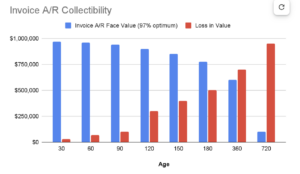
The average collectibility for B2B invoice receivables by age can vary widely depending on industry, customer base, economic conditions, and credit practices. However, a general trend can be observed in how the likelihood of collection changes over time. 

The time for outside, “third-party” collection agency action is when the debt may still be collectible, best from 90-120 days past due. Waiting too long is to invite a total write-off.

Here’s a typical breakdown by age of receivables:

  1. 0-30 Days Past Due:
    • Collectibility: 95% to 97%
    • Comments: Most recent invoices are usually collected without significant issues, as they are within standard payment terms.
  2. 31-60 Days Past Due:
    • Collectibility: 80% to 90%
    • Comments: These receivables might require follow-up reminders or slight collection efforts. The probability of collection remains high but begins to decrease.
  3. 61-90 Days Past Due:
    • Collectibility: 60% to 75%
    • Comments: At this stage, the collectibility decreases more noticeably. More aggressive collection actions might be required.
  4. 91-120 Days Past Due:
    • Collectibility: 30% to 40%
    • Comments: Receivables older than 90 days are increasingly difficult to collect. This often requires significant effort or third-party collection agencies.
  5. 121-180 Days Past Due:
    • Collectibility: 40% to 50%
    • Comments: The probability of collecting these receivables is low. Legal action or substantial incentives may be necessary to recover some of these debts.
  6. 181+ Days Past Due:
    • Collectibility: Less than 50%
    • Comments: Receivables in this category are often considered highly unlikely to be collected and might be written off as bad debts.
  7. 360+ Days Past Due:
    1. Collectibility: Less than 70%
    2. Comments: Receivables in this category are often considered highly unlikely to be collected and might be written off as bad debts.

These percentages can fluctuate based on specific business practices, customer relationships, and economic conditions. Maintaining good credit management and proactive collection efforts can help improve the collectibility of receivables.


From the practitioners at Leib Solutions LLC, a Smyyth company

A/R Deduction Recoverability by Age

Accounts receivable analyst reviewing deduction aging reports and SKU-level reconciliation data to identify recoverable overcharges.

Accounts Receivable deductions can dilute revenues from 5%  in industrial companies to 20% in consumer products companies. These deductions arise from various issues, including ordering and billing errors, returned merchandise, pricing discrepancies, trade promotion deals, payment discounts, shipping errors, and non-compliance with customer vendor policies.

Deduction overcharges, far from being exceptional, are a common occurrence. Many deductions contain errors that can significantly impact sellers’ profits. For instance, up to 50% of returns are overstated due to SKU, price, or quantity errors. Post-audit deductions, which result from post-payment reviews, can be over 75% incorrect. Errors in trade deals and volume discount deductions are often substantial. These inaccuracies underscore the need for efficient reconciliation and resolution processes to mitigate the potential for significant and sometimes hidden revenue and profit losses.

Reconciling deductions against related credit memos is challenging due to the volume and variety of SKUs. Our extensive experience and specialized software enable us to reconcile and identify overcharges on any scale, even spanning several years for a trading partner.

Deduction Staff and Systems

Other crucial factors in managing deductions include the experience of your staff and the time available to pursue these claims. The most effective A/R systems utilize automated bots to access claims from major retailers before deductions are made, allowing more time to resolve issues before automatic deductions occur. Some chain retailers even have time periods, say 60 days, after which they consider their claim valid and won’t discuss it. This underscores the need for a strategic approach to deduction management, considering both your staff’s capabilities and the process’s time constraints.

Twenty years ago, many deductions were “negotiable,” and 50/50 across-the-board settlements were sometimes possible. Today, you must prove the customer is wrong in specific detail and do it quickly. While most deductions are generally accurate, the average recoverability on gross deducted amounts ranges between 10% and 20%, depending on factors like your industry, customer base, processes, systems, and the speed of your investigation. There is a lot of money involved.

Information You Get from Analyzing Deductions

Analyzing customer Accounts Receivable (A/R) deductions can uncover various operational errors impacting a company’s financials and operations, so your systems should include root cause accountability, enabling you to eliminate systemic process failures. Here are some common types of operational errors that can be identified:

1. Pricing Errors

  • Incorrect Pricing: Not billing according to the P.O. terms.
  • Misapplied Discounts: Applying discounts incorrectly or not applying agreed-upon discounts.
  • Price Changes Not Updated: Customer failure to update systems with current pricing information.

2. Shipping and Delivery Errors

  • Incorrect Shipments: Using the wrong carrier, not calling for appointment windows.
  • Late Deliveries: Delivering products later than agreed, causing penalties.
  • Shipping Damage: Products damaged during shipping, leading to returns or deductions.
  • Freight Charges Errors: Incorrectly billed shipping and handling charges.

3. Compliance and Contractual Errors

  • Non-Compliance with Vendor Policies: Not adhering to customer’s specific vendor compliance requirements.
  • OTIF failures
  • Contractual Non-Compliance: Failing to meet terms and conditions stipulated in contracts.
  • EDI Errors: Issues related to Electronic Data Interchange, such as incorrect formats or missing data.

4. Trade Promotion and Discount Errors

  • Promotion Misapplication: Incorrectly applying trade promotions and discounts.
  • Unauthorized Deductions: Customers taking unauthorized deductions without proper agreement.
  • Rebate and Allowance Mismanagement: Errors in calculating or applying rebates and allowances.

5. Returns and Refund Errors

  • Misprocessed Returns: Incorrect processing of returned goods, leading to overstated returns.
  • Return Authorization Issues: Not properly authorizing returns, resulting in disputes and deductions.
  • Restocking Fee Misapplication: Failing to apply restocking fees where applicable.

6. Order Processing Errors

  • Order Entry Mistakes: Errors in entering orders into the system, leading to incorrect fulfillment.
  • Miscommunication: Issues stemming from poor communication between sales, billing, and shipping departments.

7. Inventory and Stock Management Errors

  • Stock-Out Situations: Failure to fulfill orders due to inventory shortages.
  • Overstock Situations: Accumulating excess inventory leading to potential obsolescence or markdowns.
  • Incorrect Stock Levels: Discrepancies between actual and system-recorded inventory levels.

8. Data Entry and System Errors

  • Manual Entry Errors: Mistakes in entering data manually, leading to inaccuracies.
  • System Integration Failures: Problems with the integration between different systems, causing data inconsistencies.
  • Outdated Information: Using outdated customer or product information in transactions.

By identifying and addressing these operational errors through A/R deductions analysis, companies can improve their processes, reduce revenue leakage, and enhance overall operational efficiency.

Lastly — Time is of the Essence to Recovery of Deduction Errors

The collectibility of deductions varies based on the type of claim, the systems and documentation you have, and the time it takes to complete your investigation and reconciliation.

A critical factor is the time it takes to research, reconcile, and prove overcharges, which often takes months, during which the likelihood of collectibility plummets. Deduction value depreciates far faster than invoice receivables so time is of the essence in tackling this challenge.

For instance, while an average overcharge rate of 14% might be assumed, this figure can be misleading. Some deductions may be entirely uncollectible (0%), while some may be fully recoverable (100%). The true nature of each deduction is only revealed through a thorough investigation.

This is where the value of intelligent automation and experienced deduction audit staff becomes evident. Automated A/R systems, like Smyyth’s advanced Carixa, for example, can cut the time it takes to document deductions from weeks to one or two days,  immensely increasing the collection rate of deduction errors. Professional staff with access to this type of software could produce ROI of 100% or more.

From the practitioners at Smyyth LLC

Collection Agency Should be Part of Your Collection Workflow

Accounts receivable workflow diagram showing internal collections escalating to third-party agency placement after 90 days past due.

All businesses face cash flow issues during challenging economic climates, making it especially difficult to collect customer payments within the agreed-upon terms. To optimize your collection efforts and cash flow, it is essential to reevaluate the priorities of your collection department, including the utilization of third-party collection agencies. Making timely referrals to these agencies for bad debts can significantly improve collection results while minimizing unnecessary costs.

Is Using an Agency a Collection Failure or an Integral Part of the Process?

  • Needing a collection agency does not represent your department’s collection failure, as a certain percentage of all customers are destined to fall into this category regardless of how hard to try to collect.
  • When your collector staff exhausts their efforts without yielding results, there comes the point of diminishing returns. In such cases, a timely collection referral can be a victory for your company.
  • Holding onto past-due accounts for extended periods diverts your staff’s attention from high-priority customers and balances, which are more profitable. Continuously pursuing payment from those who consistently fail to pay is an unproductive use of resources.
  • By allowing collection agencies to handle difficult cases, your internal collectors can focus on where the cash comes from rather than being tied up with long overdue unpaid balances. The longer an account remains past due, the more challenging it becomes to collect. Collectability decreases each month to the extent that after nine months, the likelihood of collection may be close to zero.

Important! Your past-due customers will seek other suppliers and you will lose business if you do not collect. Consequently, integrating timely collection agency referrals into your collection process is essential.

Considerations for Collection Agency Placements:

  1. Utilize your internal resources for accounts 10 to 90 days past due, as they contribute 95% of your cash flow and offer a high return on your time investment. Allow your staff to focus on the accounts receivable that keep your business running.
  2. Waiting beyond 90 to 120 days and hoping for collection before referring the account to a collection agency is counterproductive. Timely interventions are more likely to succeed.
  3. Assigning accounts to a collection agency immediately grabs customers’ attention as they realize that the unpaid debt could negatively affect their credit bureau scores.
  4. Collection agencies charge fees based only on the cash recovered, and a reputable agency increases the chances of successful collection.
  5. The agency can tailor their collection tactics, employing a customer service approach when you hope for future business and a more assertive approach for chronic late payers.

When is the Right Time to Refer a Debt for Collection?

Consider the following five factors before deciding to refer a customer to a collection agency:

  1. The account is 90 days late.
  2. The customer has failed to follow through, broken a promise to pay, or become difficult to reach.
  3. The customer has indicated financial difficulties.
  4. Remember that your customers prioritize their cash payments, and they pay those who have taken more aggressive actions or whose products they need. You have become a low priority and will lose future revenues if you do not collect.

What to Look for in a Collection Agency:

When selecting a collection agency, keep the following eight factors in mind:

  1. Membership in a professional organization such as the International Association of Commercial Collectors (IACC) upholds a strict code of ethics and legal compliance.
  2. Agencies specializing in either B2B or consumer collections. Collecting from businesses is more challenging and requires specialized expertise. If you have commercial debt, choose a commercial bad debt agency.
  3. A well-established track record, having been in business for many years.
  4. The ability to communicate with the agency’s management before initiating business and during the collection process. 
  5. An excellent history of collection results and adherence to market-standard contingency fees.
  6. Strong reviews, such as positive feedback from clients on platforms like Google, indicate trustworthy and quality relationships.